
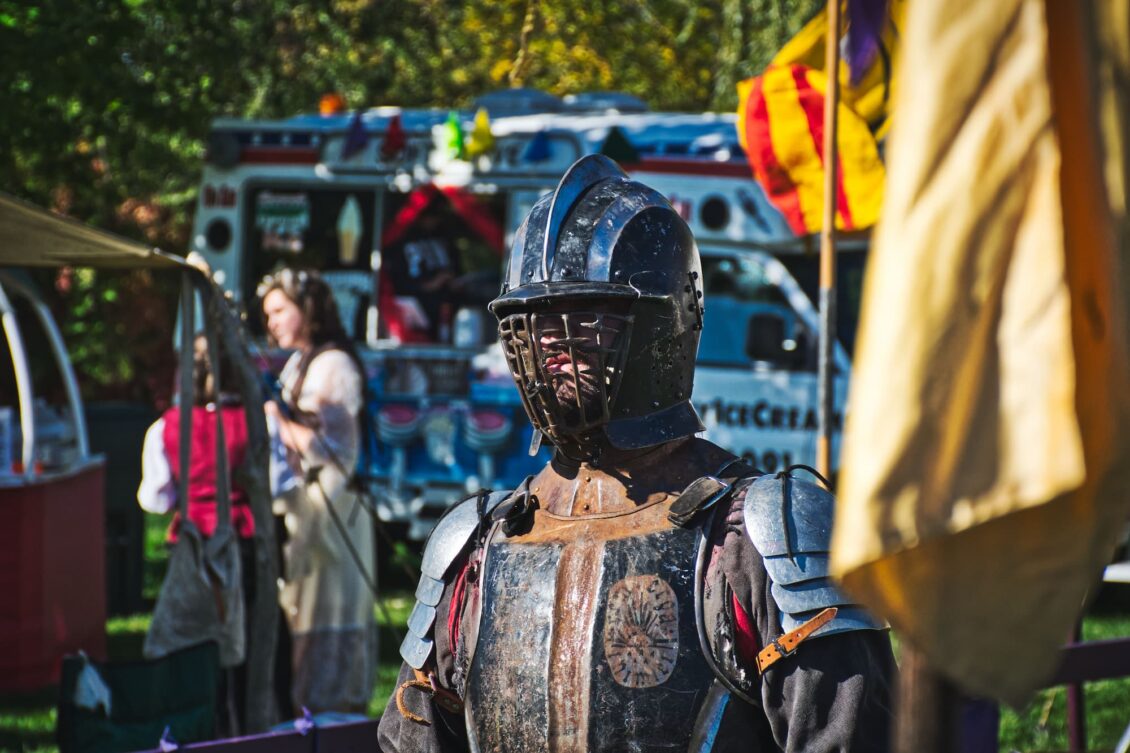
Concept artists have a strange advantage: gravity is optional.
A shoulder plate can extend twice as far as anything a real person would comfortably wear, a helmet can narrow the field of vision almost to nothing, and layers of decorative metal can overlap in ways that would make getting dressed a twenty-minute engineering exercise. On screen, none of that matters. If the silhouette works, it works.
Things become more interesting when somebody decides to build it.
Turning a fantasy design into wearable equipment forces the original idea to negotiate with the human body. Suddenly there are shoulders that need to rotate, hands that must reach weapons and props, and a wearer who may spend an entire day walking around in whatever looked effortless in the original painting.
That gap between image and object is where some of the best design decisions happen.
Concept Art Sets the Rules
Before any material is cut, cast, printed, or painted, the concept usually establishes the language of the piece.
A knight covered in sharp architectural forms tells a different story from one whose armor resembles bark, bone, or overlapping insect shells. Surface details matter, but the silhouette normally speaks first. You can often shrink a good character design until most of the ornament disappears and still recognise who that character is supposed to be.
That is useful when translating a drawing into physical equipment because not every detail deserves equal attention.
Some elements define the design. Others can change.
Knowing What Can Be Sacrificed
This may be the least glamorous part of bringing concept art into reality.
An enormous collar might need to become smaller. A decorative spike may move several centimetres so it stops catching another plate. Something beautifully symmetrical in the illustration may need a hidden opening, buckle, strap, or flexible connection simply so a person can put it on.
Good adaptation does not mean reproducing every line exactly. It means understanding which lines actually mattered.
When the Design Leaves the Screen
Modern production has made that transition considerably more interesting.
Digital sculpting allows a maker to examine a design from angles the original illustration may never have shown. 3D printing can turn those files into physical masters, while molds and casting make it possible to preserve complicated textures and repeated decorative forms.
This is where something like LARP Armor becomes an interesting case study for concept artists. The finished object still needs the exaggerated forms and visual storytelling expected from fantasy art, but it also has to fit a human body, remain wearable, and survive repeated use outside a controlled studio environment.
That makes material choice part of the design rather than something decided afterwards.
Materials Change the Silhouette
Steel naturally encourages certain forms because its weight and construction methods impose limits. Leather behaves differently. Foam creates another set of possibilities, while polyurethane casting can reproduce deep sculpted details and complex fantasy surfaces without requiring every visible plate to carry the weight of metal.
Change the material and the artist may start drawing differently.
That feedback loop is easy to overlook. Production follows concept art, but concept art also evolves once artists understand what workshops can actually manufacture.
Paint Finishes the Illusion
The physical shape is only half the trick.
Primer, metallic layers, shadows, edge highlights, scratches, dirt, oxidation effects, and tiny changes in surface tone can make a lightweight piece read visually as something much heavier. It is similar to painting a concept illustration, except the light is no longer controlled by the artist.
The object has to work from every angle.
Design Gets Better When Disciplines Meet
Concept artists do not need to become mold makers, painters, or manufacturing specialists. Still, understanding those disciplines changes the way they think.
The same happens in reverse. Makers who study concept art begin paying more attention to silhouette, rhythm, proportion, and visual hierarchy instead of treating every decorative detail as equally important.
Somewhere between those two viewpoints, fantasy equipment stops looking like a drawing copied into three dimensions.
It begins to feel like an object that could genuinely belong to the world the artist imagined.